
7 Reasons Your Chihuahua Puppy Shivers in Its Sleep
Quick Summary
A chihuahua puppy shiver during sleep is usually normal REM dreaming, when muscles twitch and whimper. Cold or low blood sugar can also cause shivering, while shaking that lasts several minutes, won't stop, or leaves the puppy weak needs a veterinarian's attention.
Normal dreaming twitches are brief, the puppy breathes steadily, and it wakes easily when called.
Shaking lasting more than a few minutes, or paired with weakness or collapse, warrants a vet call.
Cold puppies often shiver while awake too, and warming the room or adding a blanket can stop it.
Chihuahuas have little body fat and a fast metabolism, so they can lose heat quickly and experience low blood sugar overnight.
Call your veterinarian for any suspected seizure, especially if it lasts more than a couple of minutes or repeats.
Table of Contents
Why Does My Chihuahua Puppy Shiver When Sleeping?
Last Updated: October 30, 2026
Why Chihuahua Puppies Shiver When They Sleep
Chihuahua puppies shiver in their sleep far more often than most new owners expect. In most cases it is normal. Puppies spend a lot of time in REM sleep, the dreaming stage, and their muscles twitch during it.
Most of the time, a sleeping puppy that twitches, whimpers, or trembles is simply dreaming. Still, a shiver can sometimes signal that a puppy is cold, uncomfortable, or unwell. Knowing the difference helps you respond calmly.
This guide covers the most common reasons, how to tell normal twitching from real trouble, and when to call a veterinarian.
Normal REM Sleep Twitching vs. Abnormal Shaking
Normal REM twitching is brief, small, and happens in a relaxed puppy. The legs may paddle, the lips may move, and the breathing stays steady. The puppy wakes up easily and returns to normal behavior within seconds.
Abnormal shaking looks different. It may be continuous, involve the whole body, or persist after the puppy wakes. A puppy with a real problem may seem confused, weak, or unable to stand.
Signs of normal dreaming:
Short bursts of leg or paw movement
Soft whimpers or small mouth twitches
Quick recovery when you gently call the puppy's name
Normal appetite, energy, and breathing afterward
Signs that need attention:
Shaking that lasts more than a few minutes
Trouble waking up or staying alert
Stiff body, paddling while unresponsive, or loss of balance
Pale gums, weakness, or refusing food
How to Tell If a Puppy Is Cold
Chihuahuas have very little body fat and a small body mass. This makes them lose heat quickly. A cold puppy will often shiver while awake, not only while sleeping.

Check these signs:
Cold ears, paws, or belly
Curling tightly into a ball
Shivering that stops once the puppy is warm
Seeking out blankets or your body heat
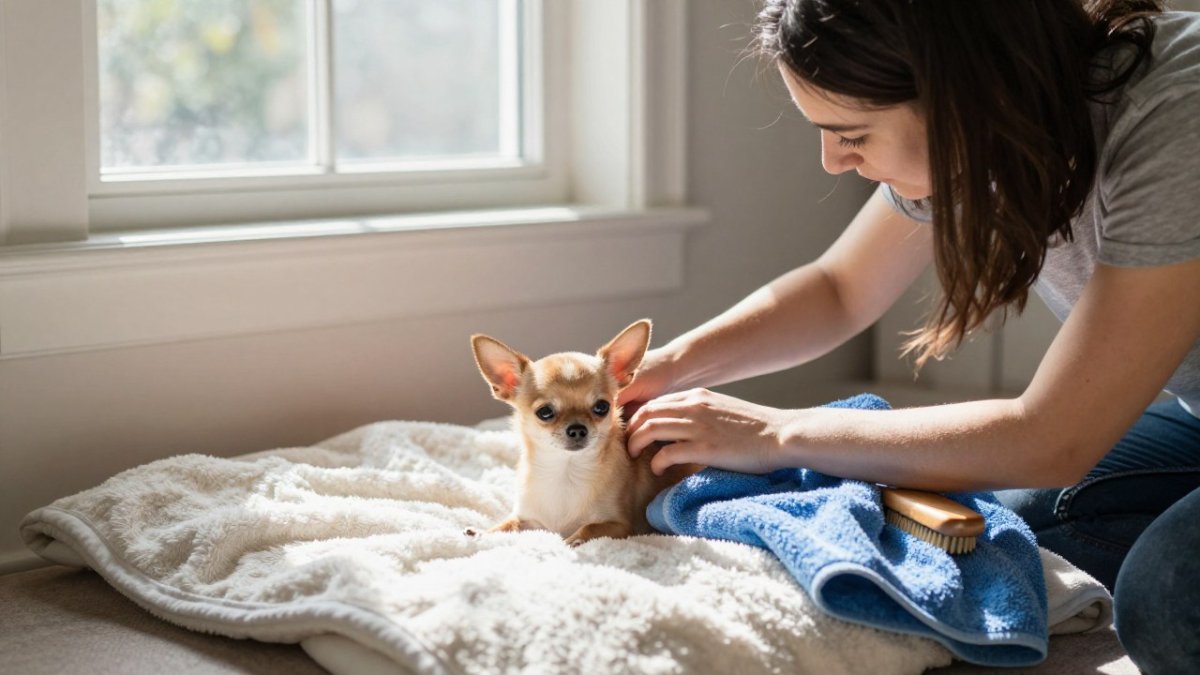
Warm the room, add a soft blanket, and keep the sleeping area away from drafts. If the shivering stops once the puppy warms up, cold was likely the cause.
Quick fixes for a cold puppy:
Use a snug, washable blanket in the bed
Keep the room at a comfortable temperature
Place a heated pad on low, with one side of the bed left cool so the puppy can move away
Shivering vs. Seizures: Knowing the Difference
This is the question that worries new Chihuahua owners most, and most articles gloss over it. Shivering, sleep twitching, and seizures can all involve a trembling puppy, but they behave very differently once you know what to watch for. Here is how to tell them apart.
The Three Things That Look Alike
REM sleep twitching. Brief, small movements, paddling legs, twitching lips, soft whimpers. The puppy is relaxed between bursts, breathing is steady, and it wakes easily when you say its name.
Shivering from cold or low blood sugar. A continuous fine tremor, usually while awake or half-awake. The puppy is responsive, may curl up, and the shaking eases once it is warmed or fed.
A seizure. A sudden, uncontrolled event. The puppy is not responsive to your voice, the movements are rigid or jerking rather than fine, and it does not stop when you comfort or warm the puppy.
A Side-by-Side Comparison
What you observe | Normal twitching / shivering | Possible seizure |
Responsiveness | Wakes or reacts to your voice | Does not respond; stares blankly |
Movement quality | Small, soft, paddling | Rigid stiffening, jerking, paddling while unresponsive |
Duration | Seconds to a couple of minutes | Often 30 seconds to several minutes, may repeat |
Body control | Regains balance quickly | Loss of bladder or bowel control, drooling, foaming |
Recovery | Instant, normal behavior | Confused, wobbly, or exhausted afterward |
The Recovery Period Is the Tell
One of the clearest signals is what happens after the episode. A puppy that was dreaming or shivering from cold snaps back to normal within seconds. A puppy that had a seizure often goes through a post-ictal phase, a period of minutes to hours where it seems disoriented, wobbly, or unusually tired. If you see that pattern, note the time and describe it to your veterinarian.
What to Do During a Suspected Seizure
Stay calm and keep the puppy away from stairs, furniture edges, and water.
Do not put your hands in or near the puppy's mouth, a seizing puppy cannot swallow its tongue, and you can be bitten.
Time the episode. Note how long it lasts and what the puppy was doing beforehand.
Call your veterinarian right away, especially if the seizure lasts more than a couple of minutes or repeats.
A seizure is an emergency for a puppy this small. Tiny bodies overheat and burn through glucose fast during a seizure, so do not wait to "see if it happens again" before calling your vet.
Why Chihuahua Puppies Are Watched Closely Here
Because Chihuahua puppies are so small, a seizure or a hypoglycemia episode can escalate quickly. That is one reason we keep a close, longstanding relationship with our veterinarian, which provides a direct line of communication and prescription authorization for all preventive meds. We normally get wormers, preventatives, and vaccines directly through Revival Animal Health, which supplies veterinary offices the same way, thereby eliminating the risk of exposure to illness. We don't take our healthy babies to the vet so that they are not exposed to airborne viruses such as parvovirus, since the vet's office is where sick dogs go.
Dreaming and shivering stop when the puppy is comforted or warmed. A seizure does not. If your puppy is unresponsive, rigid, or slow to recover, treat it as an emergency and call your veterinarian.
Breed Traits That Affect Chihuahua Puppies
Chihuahuas are not just small dogs, they are built differently, and those differences explain a lot of the shivering you see at night. Chihuahuas are very small dogs, and that tiny frame drives many of the reasons a puppy trembles in its sleep.
Low Body Fat and a High Surface-to-Volume Ratio
A Chihuahua puppy has very little insulating body fat and a large skin surface relative to its mass. Heat escapes faster from a small body than a large one, so a puppy loses warmth quickly once it stops moving. During sleep, when muscles relax and metabolism dips slightly, that heat loss becomes noticeable, and the body responds with shivering to generate heat. This is why a Chihuahua puppy may shiver in a 70°F room that feels perfectly comfortable to you.
A Fast Metabolism That Burns Fuel Quickly
Toy breeds run a higher metabolic rate per pound than large breeds. That means a Chihuahua puppy burns through blood glucose faster and has smaller liver glycogen reserves to fall back on. Overnight, especially if the puppy skipped its last meal or had a long, exciting day, blood sugar can dip low enough to cause trembling, weakness, or a glassy stare. This is hypoglycemia, and it is one of the most common medical reasons a Chihuahua puppy shivers. A puppy under about 12 weeks old is at the highest risk.
If your sleeping puppy is trembling and also feels limp, won't wake fully, or has pale gums, treat it as a possible hypoglycemia episode. Call your veterinarian immediately. Do not wait to see if it passes.
The Molera (Soft Spot)
Many Chihuahuas are born with an incomplete skull closure, a soft spot on the top of the head called a molera. It is a normal, breed-typical feature, not a defect, and most close on their own as the puppy grows. It matters here for one reason: it makes the head more vulnerable to bumps. A puppy that shakes after a fall or a knock to the head should be checked by a veterinarian, because head trauma can cause tremors that look like shivering.
Coat Type Changes the Math
Smooth-coated Chihuahuas have almost no insulation, while long-coated puppies hold heat better. Two puppies of the same weight can respond very differently to the same bedroom temperature. If you have a smooth-coat, plan on a warmer sleep spot and a blanket; a long-coat may need less.
What This Means for Our Puppies
At Dreamer's Pups, we have diversified our lines with breeders from the east coast to the west, ensuring that our lines are never bred too close. As a result of this strategy, we have only had reports of less than 1% of puppies sold over our 20+ year breeding history having issues. If anything congenital were to arise, we are more than willing to replace the puppy in accordance with our 1-year congenital health guarantee.
Chihuahua puppies shiver in their sleep for breed-specific reasons: low body fat, a fast metabolism that can tip into hypoglycemia, and a small frame that loses heat fast. Knowing these mechanisms helps you tell a normal chill from a real problem.
When to Call a Vet for a Shaking Puppy
Call your veterinarian if you notice any of the following:
Shaking that lasts longer than a few minutes
Seizure-like behavior
Weakness, collapse, or trouble standing
Vomiting, diarrhea, or refusing food
A puppy that does not perk up after warming
If you are unsure, call. A quick check can give you peace of mind, and early care matters most for tiny puppies.
Settling Your Puppy Into Your Home Before You Worry
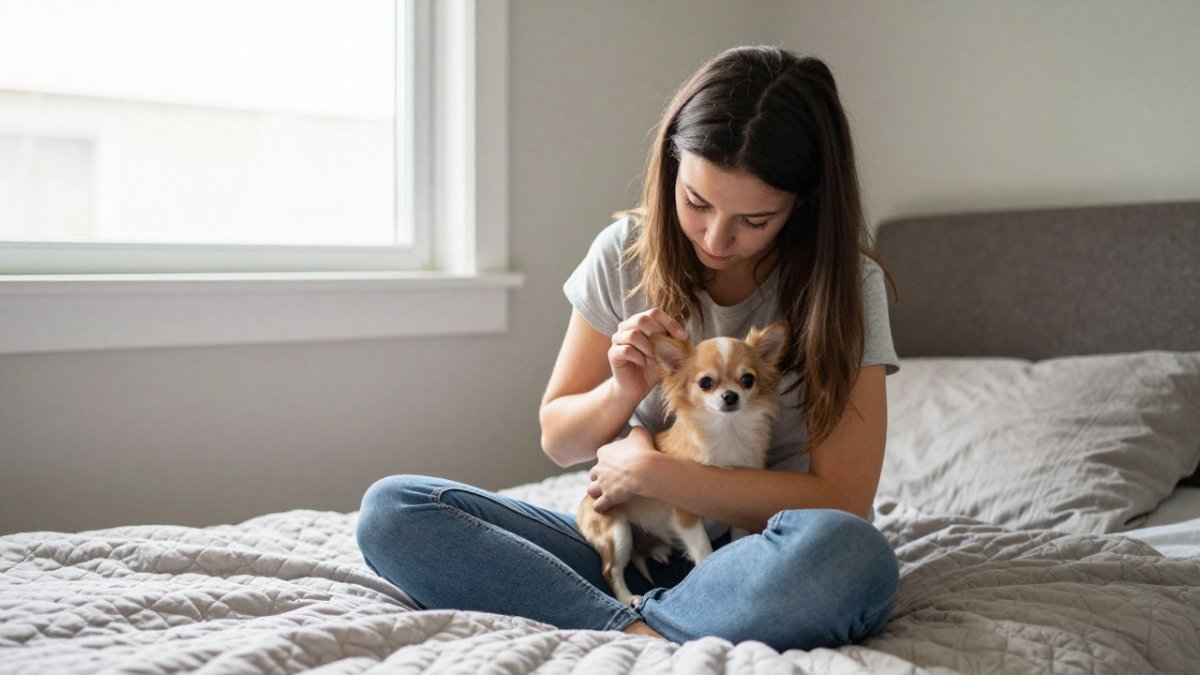
A new puppy often shivers and twitches more in the first few nights because the surroundings are unfamiliar. Give your puppy a quiet sleeping spot, a warm blanket, and a regular routine. Most puppies settle within a few days.
Our team is happy to answer questions as you get started. You can browse our available white Chihuahua puppies to see the coat colors and temperaments we raise. If you want more guidance on your first weeks at home, our post-adoption support guide for Chihuahua owners covers the basics. For cozy bedding and comfort items, you can also explore Baby Lilo essentials.
Frequently Asked Questions
Is it normal for a puppy to twitch or shake in its sleep?
Yes, brief twitching of the legs, paws, whiskers or face is common in puppies and usually reflects REM sleep, the stage when dreaming occurs. Normal twitching is short, stops when the puppy wakes or is gently touched, and the puppy looks relaxed and responsive afterward. Repeated, prolonged or unresponsive shaking is different and should be checked by a veterinarian.
How can I tell whether my puppy is dreaming or having a seizure?
A dreaming puppy usually twitches in short bursts, may whimper or paddle its legs, and wakes easily with a gentle voice. A seizure often involves rigid or jerking whole-body movements, loss of awareness, drooling, or stiffened limbs, and the puppy may not respond when you speak. Seizures lasting more than a few minutes, or repeated episodes in one day, need prompt veterinary care.
Could my Chihuahua puppy be cold while sleeping?
Yes. Chihuahuas are a toy breed with little body mass and limited subcutaneous fat, so they lose heat faster than larger dogs. A puppy that feels cool to the touch around the ears, paws or belly, or that curls tightly and shivers at rest, may simply need a warmer bed, a blanket it can burrow under, or a draft-free spot. Warm the room and recheck before assuming a medical cause.
When should I call a veterinarian about my puppy shaking?
Call a veterinarian promptly if the shaking lasts more than a few minutes, the puppy does not respond to your voice, there is drooling, vomiting, weakness, pale gums, or trouble walking, or the episodes keep returning. Toy puppies can develop low blood sugar, which can cause trembling and weakness, so a puppy that is lethargic or shaking while awake should be seen quickly. Keep a short video of the episode to show your vet.
Thinking about bringing home a Chihuahua puppy raised in a loving family home? Dreamer's Pups focuses on health, temperament, and a smooth transition into your household. Reach out to start the conversation.
Comments