
Are Chihuahuas Suitable for Busy Families? A 2026 Guide
Table of Contents
Chihuahua Temperament with Children: What Busy Parents Should Know
Supervision and Roughhousing: Non-Negotiables for Families
Why Mature Children Often Do Better Than Toddlers
Chihuahua Exercise Requirements for Families: How Much Is Enough?
Indoor Play and Enrichment When Time Is Short
Chihuahua Separation Anxiety Management for Working Households
Crate Training and Departure Cues That Reduce Stress
Time-Management Strategies for Busy Owners
The Financial Breakdown of Chihuahua Ownership
Common Health Considerations and Lifespan
Pros and Cons: Is a Chihuahua Right for Your Busy Family?
Frequently Asked Questions
Last Updated: September 19, 2026
Chihuahua Temperament with Children: What Busy Parents Should Know
Are chihuahuas suitable for busy families? The honest answer is yes, with conditions. A well-socialized Chihuahua can thrive in a household where both parents work, provided the family understands the breed's temperament and builds a routine around it. This guide from Dreamer's Pups breaks down what actually matters: supervision, exercise, separation anxiety, time management, and cost.
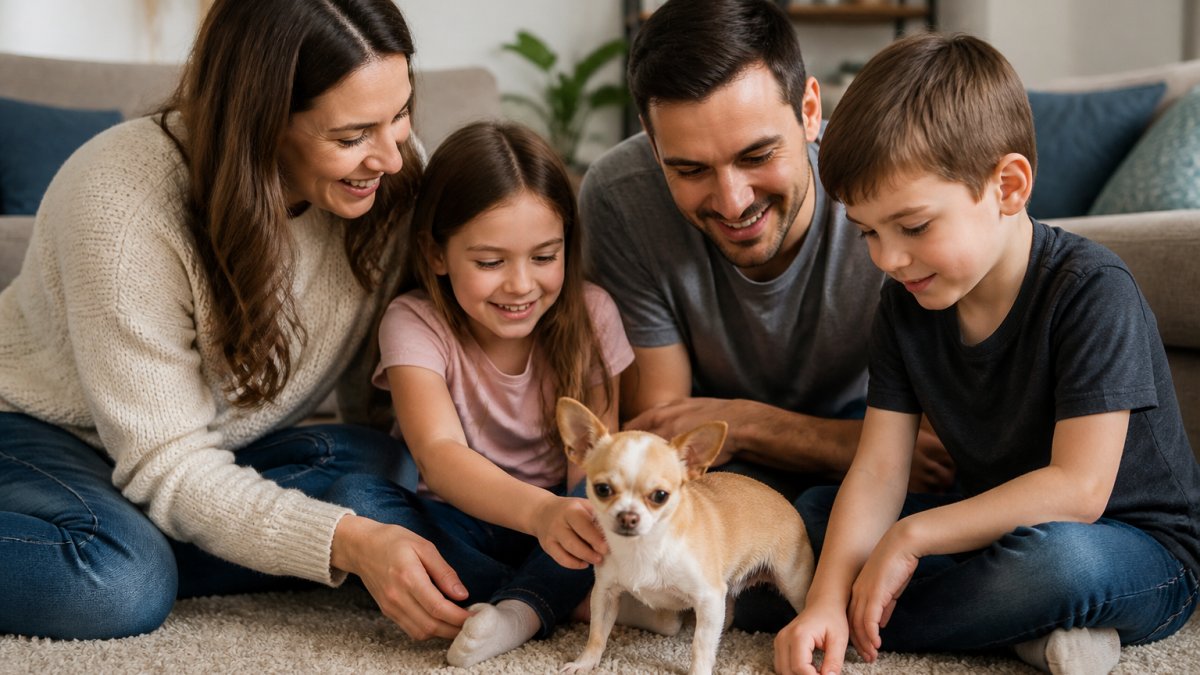
The Chihuahua temperament with children is best described as loyal and alert, but also fragile and easily overwhelmed. Chihuahuas bond intensely, often to one person, and they read fast, loud movement as a threat. That's not aggression. It's a small animal protecting itself. Families who respect that distinction tend to do well. Families who treat a Chihuahua like a Golden Retriever usually don't.

Supervision and Roughhousing: Non-Negotiables for Families
Supervision isn't optional with a small breed and young kids. A Chihuahua weighs a few pounds, and a toddler's hug can fracture a rib or cause a fall injury. The American Kennel Club breed standards and temperament guidance notes that Chihuahuas are alert, confident, and often territorial, traits that make them excellent watchdogs but poor candidates for chaotic play.
Set three household rules and enforce them from day one:
No picking up the dog without an adult present
No roughhousing within reach of the puppy
No approaching the dog while it's eating or sleeping
Roughhousing is the single most common cause of bites in homes with small dogs. A child who learns to sit on the floor and let the dog come to them avoids almost every problem.
Why Mature Children Often Do Better Than Toddlers
Children over seven typically do better with a Chihuahua than toddlers do. They can follow handling instructions, read a dog's body language, and understand that a growl means "back off," not "be cute." Toddlers can't do any of that, and a Chihuahua that snaps in self-defense may face consequences the child caused.
That doesn't mean families with toddlers can't own a Chihuahua. It means the adults carry 100% of the responsibility for safety until the child is old enough to share it. If your household is stretched thin already, waiting a year or two is a reasonable call.
Chihuahua Exercise Requirements for Families: How Much Is Enough?
Chihuahua exercise requirements for families are modest: roughly 20 to 30 minutes of activity per day, split into two short walks or play sessions. That's the good news for busy households. A Chihuahua is an indoor dog by nature, and it doesn't need a yard, a long run, or a daily trip to the park.
What it does need is mental engagement. A bored Chihuahua becomes a destructive one, and boredom looks like barking, chewing, and house-training setbacks. Enrichment matters more than distance.
Indoor Play and Enrichment When Time Is Short
Ten minutes of focused play beats an hour of distracted attention. Try these when the schedule is tight:
A puzzle feeder at breakfast (5 minutes of setup, 20 minutes of engagement)
A five-minute training session using positive reinforcement
A short hallway fetch session before dinner
Crate training helps here too. A puppy that's comfortable in a crate can rest safely while you're at work or managing homework, and it prevents accidents that set house-training back.
Chihuahua Separation Anxiety Management for Working Households
Chihuahua separation anxiety management is the biggest practical challenge for working families. This breed was developed as a companion animal, and it bonds hard. Left alone for long stretches without preparation, many Chihuahuas bark, pace, chew, or refuse to eat.
The fix starts before the dog arrives.
Crate Training and Departure Cues That Reduce Stress
Departure cues are the rituals that tell your dog you're leaving: grabbing keys, putting on shoes, picking up a bag. A dog with separation anxiety learns to panic at the first cue. Break the pattern by picking up your keys randomly throughout the day and then not leaving.
Pro Tip If you work long hours, a midday dog walker or a trusted neighbor who can check in once is worth more than any training tool. A Chihuahua that gets one break in the middle of the day handles alone time far better than one that doesn't.
Time-Management Strategies for Busy Owners
Busy families don't need more hours. They need a routine that runs on rails. The owners who succeed with a Chihuahua are the ones who attach dog care to things they already do, rather than treating it as a separate task.
Here's a workable daily structure:
Time | Task | Duration |
Morning, before work | Walk plus breakfast in a puzzle feeder | 15 min |
Midday | Check-in, walker, or potty break | 10 min |
After school or work | Training session plus play | 15 min |
Evening | Walk plus quiet lap time | 20 min |
The Financial Breakdown of Chihuahua Ownership
The purchase price is the smallest number in the budget, and most guides skip the rest. This is the section competitors leave out: a line-item view of what a Chihuahua actually costs a household over time, so you can decide before you commit rather than after.
Upfront costs (first 30 days)
Puppy purchase or adoption fee, varies widely by source and bloodline
First wellness exam and fecal test
Core vaccinations (distemper, parvovirus, adenovirus, parainfluenza) plus rabies
Spay or neuter, typically scheduled between four and six months
Microchip and registration
Crate, bed, food and water bowls, leash, harness, collar, ID tag
Starter food, puppy pads, and a dental kit
Recurring annual costs
Food (a Chihuahua eats very little, one of the cheapest breeds to feed)
Routine wellness exam and booster vaccines
Dental cleaning under anesthesia, which most toy breeds need periodically
Flea, tick, and heartworm prevention year-round
Nail trims and occasional grooming (long-coats cost more)
Pet insurance, if you carry it
Boarding or a dog walker during workdays and travel
The breed-specific cost drivers
Watch Out The cheapest puppy is rarely the least expensive dog. Puppy mill puppies frequently arrive with parasites, untreated hernias, or genetic conditions that surface within the first year, and those vet bills land on you.
Pro Tip Ask your vet for a written estimate of first-year costs before you bring a puppy home. A Chihuahua's low food and exercise costs are real, but dental care and toy-breed orthopedic risk are the two line items that catch new owners off guard.
Common Health Considerations and Lifespan
The Chihuahua lifespan runs 14 to 16 years, which is one of the longest of any breed. That's a real commitment. A puppy you bring home this year may still be with you when your youngest child graduates.
Key Takeaway A Chihuahua is a long-lived companion, not a short-term project. Families should plan for 14 or more years of care, not just the puppy stage.
Pros and Cons: Is a Chihuahua Right for Your Busy Family?
Most guides end this section with a shrug. Here is the honest split, followed by a fit test you can run against your own household in about two minutes.
Pros
Low exercise needs, roughly 20 to 30 minutes a day, split into two short sessions
Small size, well suited to apartments and tight spaces
Light grooming; short-coats need only occasional brushing
Long lifespan of 14 to 16 years and intense loyalty to their people
Adaptable to indoor routines and happy with lap time as exercise
Cheap to feed compared with medium and large breeds
Cons
Strong attachment drive makes separation anxiety the breed's biggest practical risk
Fragile frame, a fall or a toddler's hug can cause real injury
Can be territorial, stubborn, and wary of strangers without early socialization
Dental care is ongoing and non-negotiable
Poor fit for households with unpredictable, week-to-week schedules
Often bonds hardest to one person, which can leave other family members feeling shut out
The fit test for a busy family
Someone is home or checking in at least once during a standard workday.
Your children are old enough to follow handling rules, or you accept full responsibility for safety until they are.
Your schedule is consistent enough to support the same routine most days.
You are willing to commit to daily dental care and routine vet visits for 14 or more years.
Key Takeaway A Chihuahua rewards consistency more than it rewards enthusiasm. If your family can hold a routine, it is one of the most practical small dogs you can own. If your weeks change constantly, choose a breed that tolerates that, or wait until yours does not.
Frequently Asked Questions
Can Chihuahuas be left alone for 8 hours?
Most Chihuahuas can handle 4 to 6 hours alone, but 8 hours regularly is tough for this breed. They bond closely and may develop separation anxiety, leading to barking or accidents. If your family works long days, plan for a midday dog walker or daycare. Chihuahua separation anxiety management works best when alone time is built up gradually from puppyhood.
What is the downside of owning a Chihuahua?
Chihuahuas are loyal but can be territorial, stubborn, and prone to barking. They are fragile, so roughhousing with young kids is risky. Dental issues, hypoglycemia, and patellar luxation are common health concerns. They also crave constant companionship, so busy families must budget real time for training, socialization, and daily interaction.
Are Chihuahuas good with children in a busy household?
With the right temperament and early socialization, Chihuahuas can do well with mature children who handle them gently. Toddlers are riskier because the dog is small and easily injured. Supervision during play and teaching kids to avoid roughhousing are essential. Families who choose a puppy raised around children often see smoother transitions.
How much daily exercise does a Chihuahua actually require?
Chihuahuas need about 20 to 40 minutes of activity per day, split into short walks and indoor play. Chihuahua exercise requirements for families are modest, which suits busy schedules. A brisk 15-minute walk plus a puzzle toy or fetch session usually covers it. Skipping exercise can lead to barking, chewing, and restlessness.
Submit

Comments