
Protecting Chihuahua Puppies From Parvovirus: A Survival Guide
Last Updated: November 1, 2026
Quick Summary
Protect chihuahua puppies from parvovirus by following the full vaccine series from 6-8 weeks through 16-20 weeks, since a puppy with one shot is not fully immune. Until the series is complete, carry them in public, avoid unknown dogs and contaminated ground, and disinfect hard surfaces with fresh bleach solution.
Most vets begin the parvovirus vaccine at 6-8 weeks and repeat it every three to four weeks until 16-20 weeks.
Keep shoes at the door and wash hands before handling the puppy, since the virus travels on people and objects.
Skip dog parks, pet store floors, and grooming salons until the vaccine series is complete.
Parvo symptoms usually appear within three to seven days of exposure; call your vet at the first sign.
If you suspect exposure, isolate the puppy and call your vet within hours, not days.
Table of Contents
Why Chihuahua Puppies Face a Higher Parvovirus Risk
Canine parvovirus is a highly contagious virus that attacks a dog's intestinal tract and, in severe cases, the heart muscle. Readers weighing a breeder's parvo-prevention practices can learn why ethical Chihuahua puppies cost more.
At Dreamer's Pups, we keep our healthy puppies away from the vet clinic waiting room, where sick dogs go, to avoid exposing them to airborne viruses such as parvovirus.
Watch out: the single most common mistake new owners make is assuming a puppy is protected before the vaccine series is complete. A puppy that has had one shot is not fully immune.
The Parvo Vaccine Schedule for Puppies: Your Protection Timeline
The parvo vaccine schedule for puppies runs in a series, not a single dose. Most vets begin the parvovirus vaccine at 6-8 weeks of age and repeat it every three to four weeks until the puppy reaches 16-20 weeks. The final booster matters most, because maternal antibodies fade at different rates in different puppies.
Here is the timeline we walk families through:
6-8 weeks: First parvovirus vaccine
10-12 weeks: Second booster
14-16 weeks: Third booster
16-20 weeks: Final booster in the series
One year later: Adult booster, then per your vet's guidance
Why the series works the way it does
A puppy nurses antibodies from the mother's colostrum in the first hours of life. Those maternal antibodies protect the puppy early on, but they also block the vaccine from triggering the puppy's own immune response. The antibodies fade on a different schedule in every puppy, so no single shot can be timed to catch every dog at the right moment. That is why the series is repeated every three to four weeks: each dose is a chance to land after the maternal antibodies have dropped low enough for the puppy's immune system to respond.
What "protected" means at each stage
Use this as a practical rule of thumb, not a substitute for your vet's advice:
Before the first shot (under 6 weeks): Assume no protection. Keep the puppy away from unknown dogs, public ground, and any area where dogs eliminate.
After the first shot (6-8 weeks): Still not protected. Maternal antibodies may still be blocking the vaccine. Carry the puppy in public; do not let it walk where other dogs walk.
Mid-series (10-14 weeks): Partial protection at best. Controlled contact with healthy, fully vaccinated adult dogs in a clean private space is reasonable; dog parks, pet store floors, and grooming salons are not.
After the final booster (16-20 weeks): The puppy is generally considered protected, but wait about one to two weeks after the final dose before relaxing precautions, and confirm the timing with your vet.
One year and beyond: Adult booster, then per your vet's guidance.
Watch Out A puppy that has had one shot is not fully immune. The single most common mistake new owners make is assuming the first vaccine is a shield. It is not.
A note on Chihuahua-sized puppies
When in doubt, treat your puppy as unprotected until the vaccine series is complete with your vet.
The American Veterinary Medical Association's vaccination guidance explains why finishing the series on schedule matters more than starting early.
Here is the protection timeline we walk families through, stage by stage.
Stage | Timing | Protection status |
Before first shot | Under 6 weeks | Assume no protection |
First vaccine | 6-8 weeks | Still not protected |
Second booster | 10-12 weeks | Partial protection at best |
Third booster | 14-16 weeks | Series still in progress |
Final booster | 16-20 weeks | Generally considered protected |
Adult booster | One year later | Then per your vet's guidance |
How to Disinfect for Parvo: Cleaning Your Home and Yard
Disinfecting for parvo is different from routine cleaning. The virus is tough and resists many common household cleaners. A diluted bleach solution is the standard option for hard, non-porous surfaces, mixed fresh and used on floors, crates, food bowls, and toys. The key word is fresh: bleach loses potency quickly once mixed, so a bottle left sitting for a day is not doing the job.
What bleach cannot fix is the yard. Outdoor ground, soil, and grass are nearly impossible to disinfect fully, and parvovirus can linger there for a long time. That is why we tell families to keep young puppies off shared outdoor ground entirely rather than relying on cleaning it.
The contamination routes most owners miss
Parvovirus does not only travel dog-to-dog. It travels on anything that has touched infected feces, which means the people and objects around your puppy are part of the risk picture:
Shoes: The bottom of a shoe is one of the most common ways the virus gets into a home. Leave shoes at the door and keep them out of the rooms where the puppy lives.
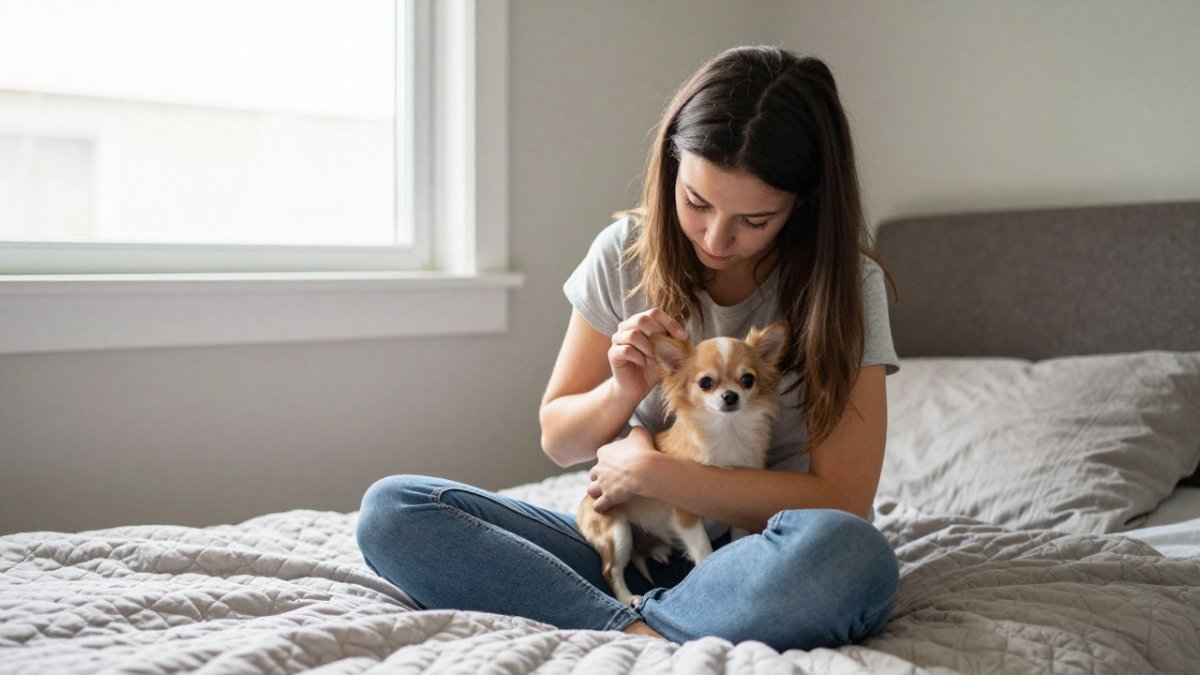
Hands: Wash hands before handling the puppy, especially after being around other dogs or public ground. A puppy that is carried and cuddled is in close contact with hands all day.
Clothing: If you have been to a dog park, a pet store, or a friend's yard with dogs, change clothes before sitting on the floor with the puppy.
Shared equipment: Leashes, brushes, carriers, and food scoops that have been around other dogs should be cleaned or kept separate.
Visitors: Ask guests to remove shoes and wash hands before meeting the puppy. A visitor who has recently been around an unknown dog is a real exposure route, even if that dog looked healthy.
A practical indoor routine
Mix a fresh bleach solution for hard surfaces
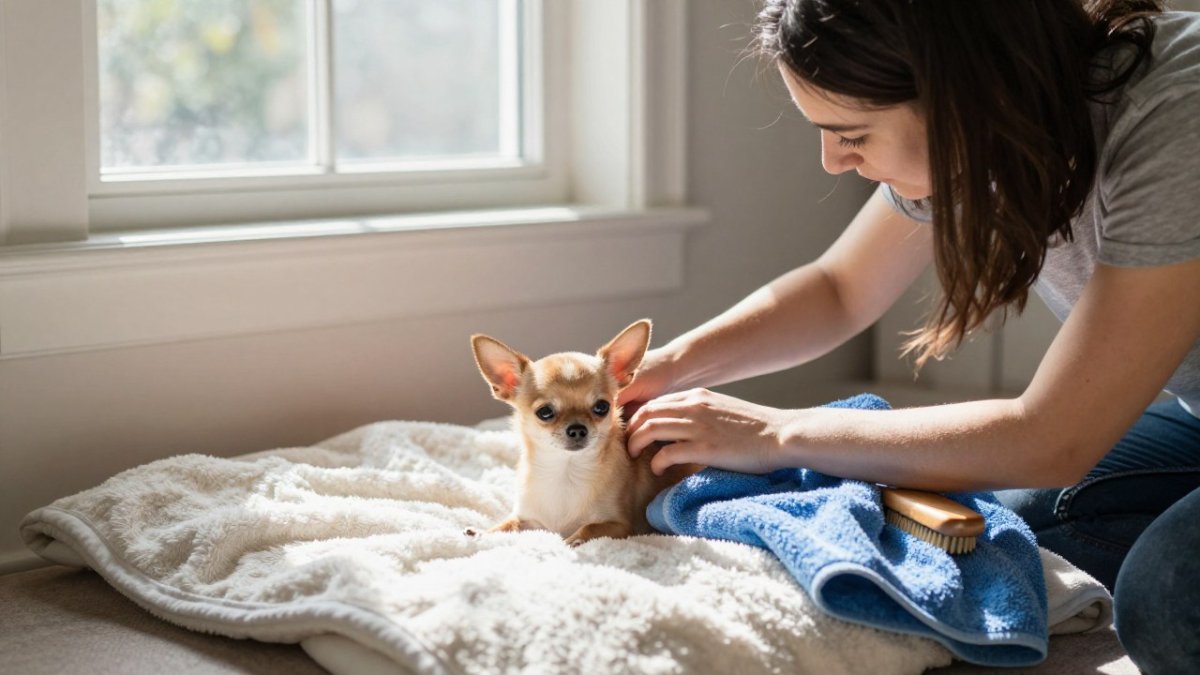
Wipe down crates, bowls, and hard toys
Wash bedding in hot water
Keep shoes away from puppy areas
Designate one easy-to-clean potty spot indoors
Set up a hand-washing station near the puppy's area
Keep a separate set of cleaning supplies for puppy spaces
Watch Out Bleach damages fabric, carpet, and some finishes. For soft surfaces, replace or discard rather than soak. Ordinary cleaning removes visible dirt but may not eliminate parvovirus, the disinfecting step is what matters.
What to do after a suspected exposure in the home
If a dog that may have been infected has been in your home, the cleanup is more aggressive than routine disinfection. Confine the puppy to a clean area, remove and wash any fabric the other dog contacted, and disinfect hard surfaces with a fresh bleach solution. Because the virus can survive on surfaces for a long time, ask your vet how long to keep the puppy out of the affected area before relaxing precautions. Maintaining this level of vigilance is essential as you prepare for puppy arrival to ensure that your home remains a safe sanctuary for your new companion.
The Environmental Protection Agency's guidance on disinfectants lists products registered for harder-to-kill pathogens.
Safe Socialization Before Puppy Vaccinations Are Complete
Safe socialization before puppy vaccinations are complete is possible, and it matters for temperament. The goal is controlled exposure to people, sounds, and gentle handling, not exposure to unknown dogs or public ground.

What we recommend for families:
Invite healthy, vaccinated adult dogs from your own household or trusted friends
Host calm visitors who remove shoes and wash hands
Carry your puppy in public rather than letting it walk
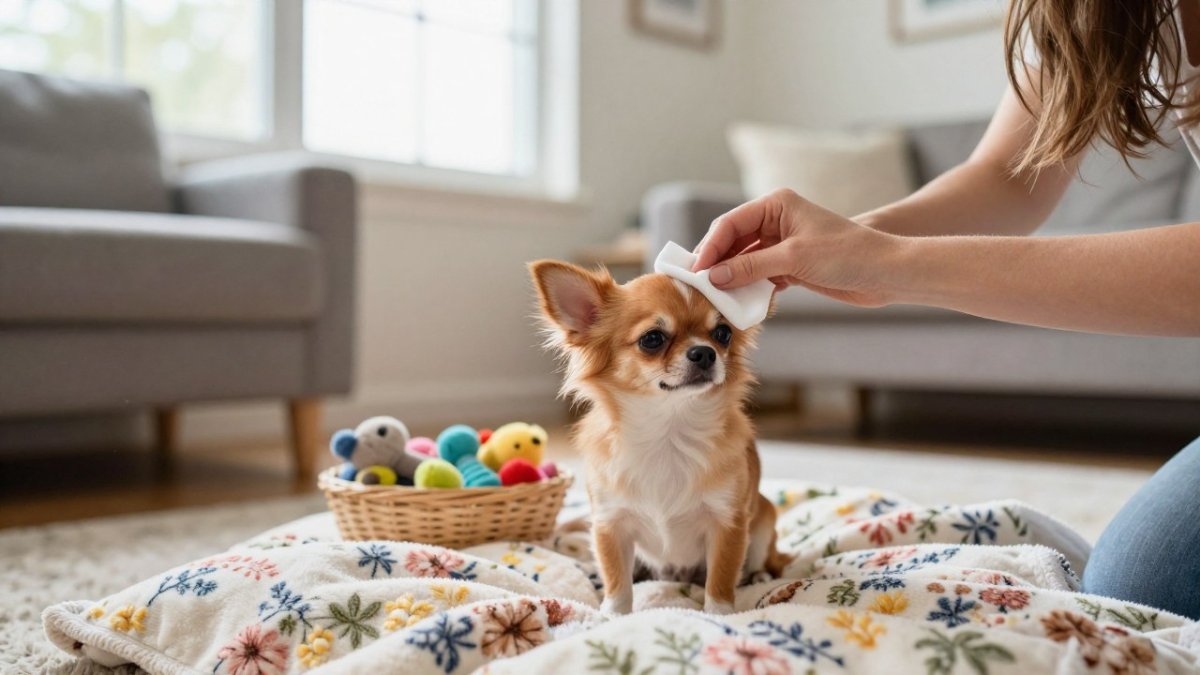
Practice handling: paws, ears, mouth, collar
Introduce household sounds at low volume
Skip dog parks, pet store floors, and any area where unknown dogs gather. Those are the highest-risk places for transmission.
Parvo Symptoms in Chihuahua Puppies: What to Watch For
Parvo symptoms in Chihuahua puppies usually appear within three to seven days of exposure. The earliest signs are often subtle: a puppy that seems tired, refuses food, or vomits once. Because small puppies decline fast, one missed meal is worth a call.
The warning signs that need urgent veterinary care:
Vomiting, especially repeated
Diarrhea, particularly bloody stool
Lethargy or weakness
Loss of appetite
Dehydration: tacky gums, loose skin
If you see these signs, call your vet immediately. Do not wait to see if it passes. Early treatment gives the best chance of recovery.
What to Do If You Suspect Your Puppy Was Exposed to Parvo
If you suspect exposure, act within hours, not days. Separate the puppy from other dogs, stop all outings, and call your vet to describe the exposure and any symptoms. Bring a stool sample if your vet asks for one.
Steps to take right away:
Isolate the puppy in a clean, easy-to-disinfect space
Stop contact with other dogs and unvaccinated animals
Call your vet and follow their instructions
Clean any contaminated surfaces with a fresh bleach solution
Track symptoms and fluid intake until you reach the vet
Do not wait for symptoms to confirm exposure. A puppy that has been around an infected dog needs veterinary advice even if it looks fine.
Bringing Home a Protected Chihuahua Puppy
A protected puppy starts with a breeder who takes exposure seriously. We diversify our lines with breeders from the east coast to the west, ensuring that our lines are never bred too close. As a result of this strategy, we have a stellar success rate: we have only had reports of less than 1% of puppies sold over our 20+ year breeding history having issues. If anything congenital were to arise, we are more than willing to replace the puppy in accordance with our 1 year congenital health guarantee.
You can read the details of our Chihuahua puppy health guarantee terms before you commit.
Frequently Asked Questions
When is a Chihuahua puppy fully protected from parvo?
A Chihuahua puppy is generally considered fully protected about one to two weeks after receiving the final dose of the parvo vaccine series, which usually happens around 16 to 20 weeks of age. Until that point, the maternal antibodies they received from their mother can interfere with the vaccine, leaving gaps in immunity. Keep your puppy away from high-traffic dog areas and unvaccinated dogs until your veterinarian confirms the series is complete.
Can a puppy get parvo before finishing its vaccinations?
Yes. Puppies are most vulnerable during the window between weaning and the completion of their vaccine series. Maternal antibodies fade at different rates, so a puppy can lose protection before the final booster. That is why limiting exposure to contaminated environments, infected dogs, and public areas is critical until the full parvo vaccine schedule for puppies is finished. Hygiene and supervised outings are your best defenses during this gap.
How long can parvovirus survive in the environment?
Parvovirus is extremely resilient and can survive in soil, on surfaces, and in feces for months, sometimes up to a year or more depending on conditions. It resists heat, cold, and many common cleaners. A bleach solution is one of the few effective disinfectants for hard surfaces, but outdoor ground and soil are nearly impossible to fully decontaminate. This is why preventing exposure is far easier than trying to eliminate the virus after contamination.
What should I do if my puppy may have been exposed to parvo?
Call your veterinarian immediately if you suspect your Chihuahua puppy was exposed to parvovirus. Watch closely for symptoms like vomiting, diarrhea, lethargy, and loss of appetite, which can appear within three to seven days. Do not wait for severe signs to develop. Your vet may recommend monitoring, supportive care, or testing. Early intervention greatly improves outcomes, so act quickly and keep your puppy isolated from other dogs until you have guidance.
Protecting a tiny puppy from parvovirus takes planning, not panic. We raise our Chihuahua puppies in a home among family, source preventatives through veterinary suppliers, and stand behind every puppy with a one-year congenital health guarantee. Get started with Dreamer's Pups and bring home a healthy, well-socialized companion.
Comments